
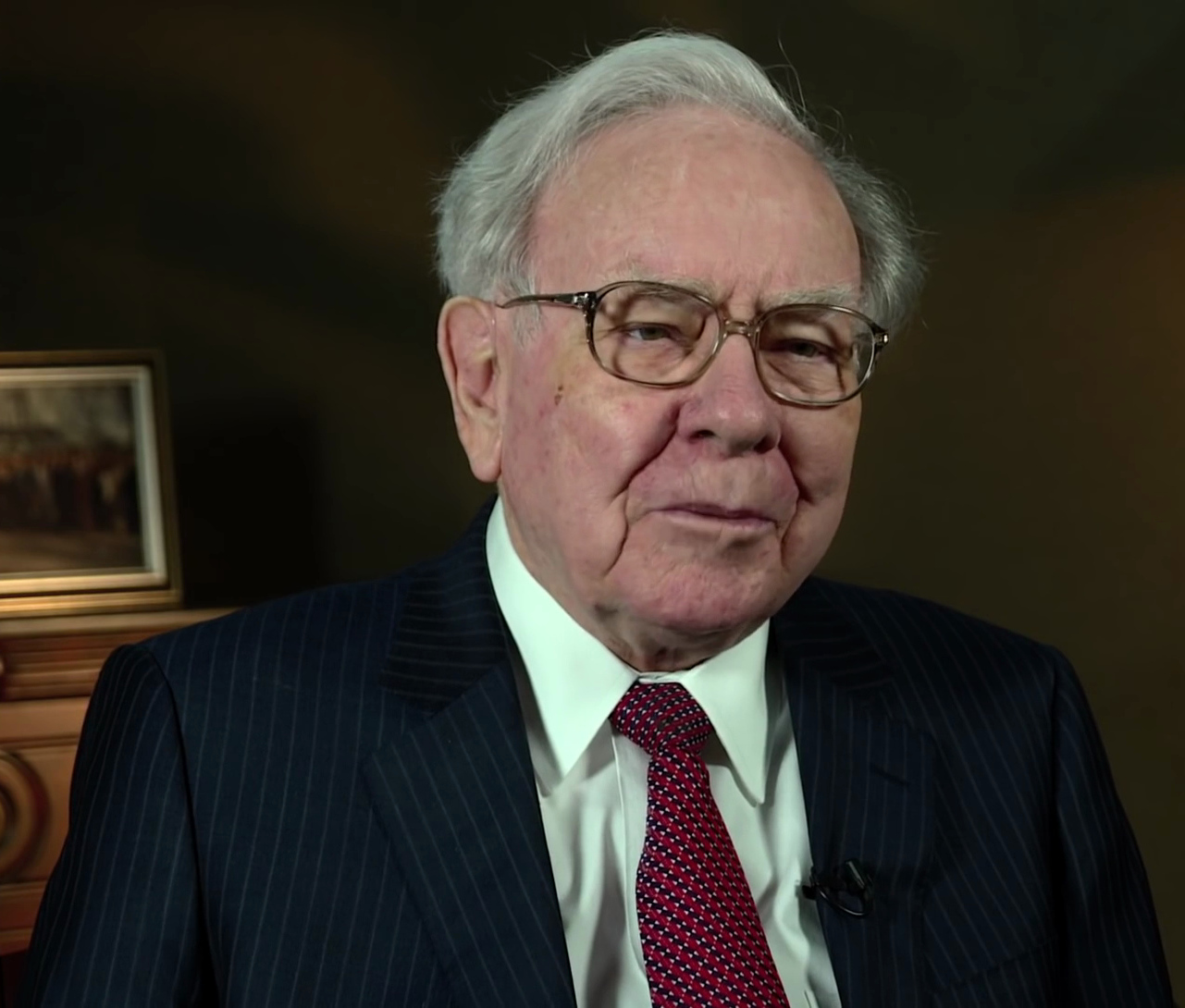
📖 Roots of the Investment Philosophy
Buffett's philosophy is a synthesis of two mentors. From Benjamin Graham he learned the quantitative discipline of "buy below intrinsic value (margin of safety)." Under Charlie Munger's influence, he evolved toward "buy a wonderful company at a fair price." He views stocks not as ticker symbols but as fractional ownership of businesses. Stock prices are short-term popularity contests, but long-term they reflect true business value.
What Coca-Cola (1988), American Express, and Apple (2016) all share in Buffett's portfolio is a powerful Economic Moat. Brand power, switching costs, network effects, cost advantages — a company needs at least one of these four moats to fend off competition over decades.
🏰 5 Core Principles
💬 Key Quotes Interpreted for Retail Investors
📊 Buffett-Style Checklist
| Criterion | Buffett's Standard | U.S. Stock Application |
|---|---|---|
| ROE | 15%+ consistently | AAPL 160%, MSFT 38% |
| Debt ratio | Lower is better | Prefer net-cash companies |
| Profit margins | Stable and high | Software / consumer brands |
| Management trust | Shareholder-friendly, candid | Read shareholder letters & IR materials |
| Business understanding | Must be in circle of competence | If you don't understand it, pass |
🇰🇷 What This Means for Korean Retail Investors in 2026
Two events have rattled the 2026 market — the 'DeepSeek moment 2.0' panic triggered by China's Moonshot AI unveiling 'Kimi K3,' and the debate over 'AI overinvestment' sparked by TSMC's massive capex expansion plan. Both are worth revisiting through Buffett's Circle of Competence principle. The semiconductor benchmark (SMH) has corrected more than 20% from its late-June peak, and while JPMorgan calls this 'a buying opportunity,' Bernstein reads it as 'a structural signal that China is gaining share.' When experts themselves disagree this sharply, that's exactly when Buffett would ask: do I actually understand this well enough to have a view?
Buffett has deliberately avoided industries where technology shifts too fast to track — semiconductor design and biotech pipelines chief among them. Even his Apple investment was framed not as a chip bet but as a consumer-franchise bet, built on brand loyalty and switching costs. Applying this in 2026: chasing chip stocks without being able to explain TSMC's leading-edge yield curve or the HBM pricing cycle is, by Buffett's definition, investing outside your circle of competence. The better question is: will this company hold the same competitive edge in ten years, or is today's price simply riding an industry-wide narrative?
Watch the extreme volatility in newly listed names like SK Hynix's Nasdaq ADR (SKHY) and SpaceX (SPCX). SKHY has swung by double digits within a single day of trading; SPCX fell more than 5% on a single failed Starship test, erasing over $1 trillion in value from its peak. Buffett's response would be simple: price volatility and business-value volatility are not the same thing. A one-week launch delay doesn't erode SpaceX's long-term reusable-rocket edge. Short-term panic can even create a margin of safety — but only if you can actually calculate the underlying intrinsic value. If you can't, it's just another form of gambling.
As the higher-for-longer rate environment drags on and growth-stock valuations keep getting reset, Buffett's long-standing cash discipline is worth revisiting too. Berkshire has repeatedly chosen to build cash rather than chase an overheated market, and that cash became ammunition during crises. Retail investors don't need to stay fully invested at all times — holding some cash until valuations reach a more reasonable range is a legitimate strategy, not because you're trying to time the market, but because you want dry powder when a real opportunity appears.
Buffett's 'price is what you pay, value is what you get' shows up vividly in Netflix's 2026 case. Netflix narrowly beat Q2 EPS, yet fell more than 15% over two days when Q3 guidance missed consensus. The numbers weren't bad — the narrative (worries about slowing future growth) was, and that alone was enough for the market to slash the price sharply. Buffett would focus on that very gap: if short-term guidance disappointment knocked the price down more than the company's long-term cash-generating power justifies, that gap is exactly where a margin of safety candidate emerges. But the same precondition applies here too — you need to be able to explain, within your circle of competence, why guidance disappointed. If you can't tell whether engagement softness is a temporary content gap or structural resistance to price hikes, that's still a judgment outside your circle of competence. The real difficulty in Buffett-style investing isn't knowing the principle — it's actually putting in the time and effort to understand a company deeply enough to apply it.
📚 Recommended Reading
- Berkshire Hathaway Shareholder Letters (1965–present, free at berkshirehathaway.com) — Primary source of Buffett's philosophy
- 『The Intelligent Investor』 by Benjamin Graham — The book Buffett calls "the best book on investing ever written"
- 『The Essays of Warren Buffett』 ed. Lawrence Cunningham — Key excerpts and commentary from shareholder letters
🎯 Warren Buffett-Style ETF Portfolio (Example)
An ETF-only approximation of Warren Buffett's known investing philosophy — not a portfolio Warren Buffett has actually recommended.
Is my portfolio diversified like Warren Buffett?
Register your holdings for a free concentration and FX-exposure diagnosis.
※ Quotes are paraphrased for clarity. This page is provided for informational and educational purposes only and does not constitute a recommendation to buy or sell any security.
More from the masters
Subscribe for new insight pieces and the daily market brief — free, unsubscribe anytime.